Light Tackle Gully Fishing For Blacktail 
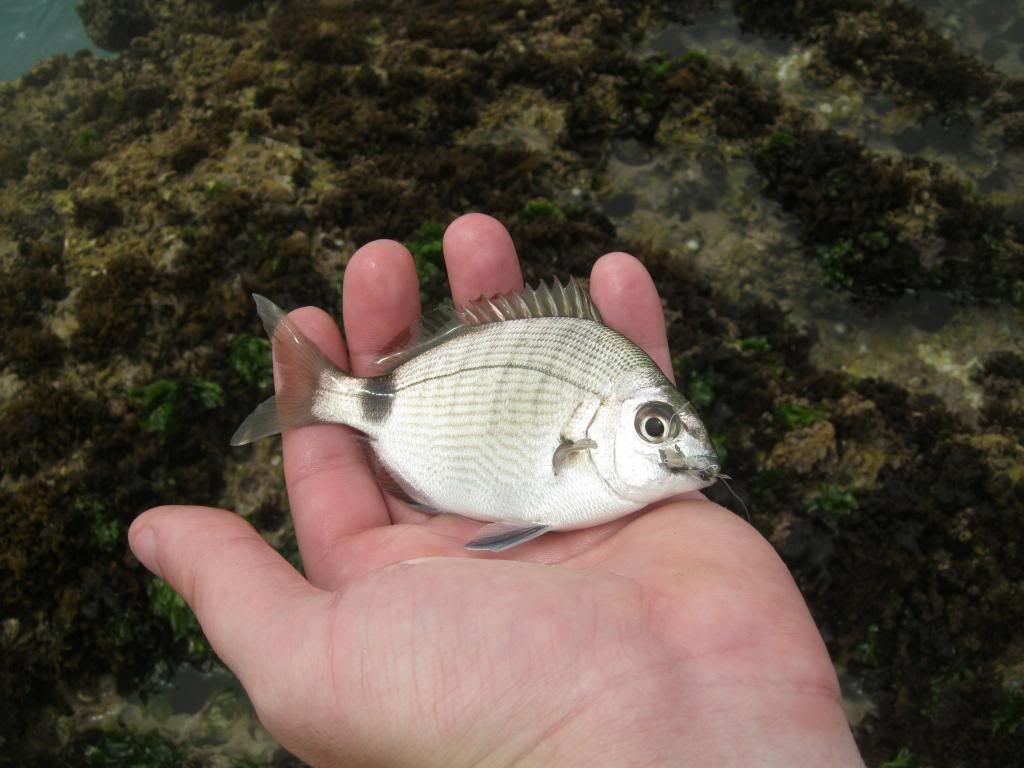
The Blacktail is an oval silver coloured fish, with a distinctive black notch at the base of the tail, and are a very underrated sport fish in my opinion. I have been catching Blacktail for years in the surf and off the bricks, but the most fun I ever have catching Blacktail is with light tackle, fishing amongst the gullies, open tidal pools and in the close in white water. Nothing beats this type of fishing for me, and if you haven’t tried it yet, give it a go, it is so rewarding and a lot of fun.
Habits
The Blacktail is primarily an inshore fish, also called the Dassie or Kolstert, that can be found around white water, rocks and a variety of shallow water habitats. Blacktail can live for well over 20 years and attain weights of more than 3 kilograms. They are omnivorous fish that breed throughout the year, but spawning peaks in the late Winter months.
Blacktail are often the first fish to come on the bite before sunrise and feed well during the start of the pushing tide. They are fairly common along the Eastern Cape coast line, but can be vulnerable to over-exploitation due to the fairly slow growth, as it takes them 3 years to become sexually mature, so think conservatively when targeting this beautiful species.
 Where to fish
Choosing a location can be a bit challenging, but as you are fishing light, you are very mobile, so you can explore a lot of areas. Mainly look for rocky gullies with access to the open ocean during all tides, these will produce your best fish, one of these areas recently produced a 37cm fish that my brother caught on a 6’6 outfit. The gully does not have to be too deep, but generally 1.5 meters and deeper hold better fish and more fish. White water is essential, as this is where the Blacktail feed. So in short this is what you should look for:
• White water
• Deepish Gullies and bays
• Green seaweed on the rocks
• Black mussels on the rocks
• An gully constantly exposed to the sea
 Bait
Then we need to talk about bait. Blacktail are not fussy eaters, but there are some baits that work better than others. You cannot beat a good old sardine fillet when targeting Blacktail, this bait is king. However I have caught my larger specimens on sand prawn. A single sand prawn with a sardine fillet as backing is superb bait for these fish. You will also catch other species with this bait; Stonebream, Bronze Bream, Musselcracker and Steenbras (To name some of the more desirable species). You can also have lots of fun targeting these fish on Berkley Camo Worm, on a small jighead, by letting it drift and slowly twitch the worm on your retrieve.
 Tackle & Traces
Now, tackle wise, since we are talking light tackle, this is what I would suggest. A rod that has a stiff body with a light, flexible tip. Generally between a 6 foot and 7’6. Nothing larger than 7’6, as this then defeats the purpose. A 6’6 rod is my favourite choice for this application. Paired with a size 2500-3000 size coffee grinder and a light braid of 8-10lb. Then a fluorocarbon leader is essential, I generally go with a 20lb leader, but you can go down to 10lb’s, it all depends on how rocky the area is where you are fishing.
The trace or rig that you will use for catching Blacktail is very important, as this can have an impact on whether you catch fish or not. There are many different traces out there that one can use, but because we are fishing lighter tackle closer in, this is what I would recommend. A single hook trace with a sharp Diachii or Gamakatsu hook, size 4 or size 2 (I very rarely throw a 1/0 or larger when light tackle fishing in gullies). Now this could be a personal preference but I have had a lot of success on the red coloured hooks offered by the 2 brands mentioned above. It could be the contrast, or it could just be in my head. A 30 cm hook snoot from the swivel to the hook is perfect, tied with 10-20lb fluorocarbon. Then I always make the sinker trace (For this application) half the length of the hook trace, and I attach a small bottle sinker to this (1/2 ounce) and tie it with fluorocarbon as well (Half the breaking strain of the hook snoot). In dirtier water, I often add a green glow bead or orange float bead above the hook, so that it sits just above the bait.
Tight lines, as Winter approaches, the Blacktail start to come on the bite all throughout the day and through different tides, go get ‘em.


