Ever wondered how a Fishing Reel's Drag system works?
Pay attention... 

WHAT IS DRAG?
Drag is the friction device in your reel that helps you control the run of a fish, much the same as brakes control the motion of your car.
In your reel, braking is achieved by applying pressure against the contact surfaces of rotating washers that are attached by some mechanism to the spinning spool. As line is removed from the reel, it is the controlled pressure acting against the contact surfaces of these washers that produces the phenomenon that fishermen call “drag” . . . it slows the removal of line from your reel by a running fish.
That controlled pressure is applied by tightening the drag knob (In a fixed spool or spinning reel) or the star-wheel or Lever Drag of your Multiplier reel.
The tightening of the drag knob typically does not act directly against the washers, but instead, the pressure is transmitted through the attenuating effects of a drag adjustment spring. If the drag adjustment spring is a soft spring, then the pressure is applied gradually as you tighten the drag knob. If the drag adjustment spring is stiff, then the pressure is applied more aggressively. The idea for the fisherman of course, is to apply just the right amount of pressure to the drag washer surfaces to create the ideal drag for his fishing situation.
All drag systems operate by tightening a knob against a single or a stack of drag washers. The mechanism has to have a spring of some type (drag adjustment spring) against which the drag knob tightens and applies the pressure to the drag washers. The style and nature of that spring is very important; that is, is it soft or firm and is it an actual spring or just a piece of spring steel like a cup or wave washer. Most spinning reels have a proper spring, whereas Multipliers generally have cupped spring washers.
The Spring inside the Drag knob of a Fixed spool reel
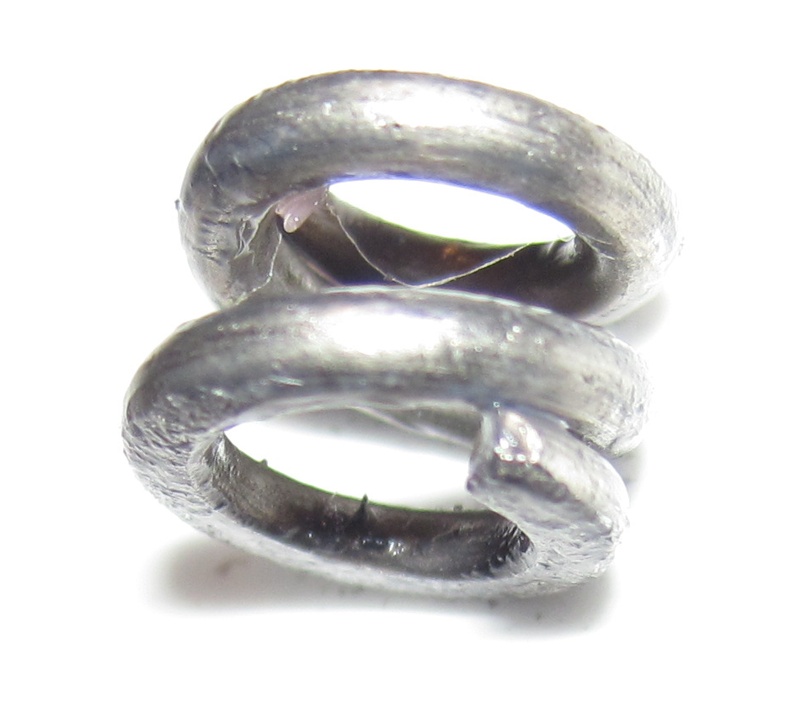
The Cupped Drag spring washers found in many Multipliers

The Drag system of a reel is made up of many parts acting together in unison - all working together to apply a brake force on the spool of the reel.
Let's look at the Basics of Drag Mechanics in a Multiplier reel
Force applied downwards by tightening the Star Drag wheel places force in varying increments against:
1. The Drag Clicker and washer
2. The Cupped Spring washers
3. The Anti-reverse Inner sleeve or collar, which acts through the middle of the Anti-reverse bearing
4. The Drag Stack, which has varying numbers of metal and synthetic washers.
5. The Drive Gear
6. The Anti-reverse ratchet and smaller Drag washer
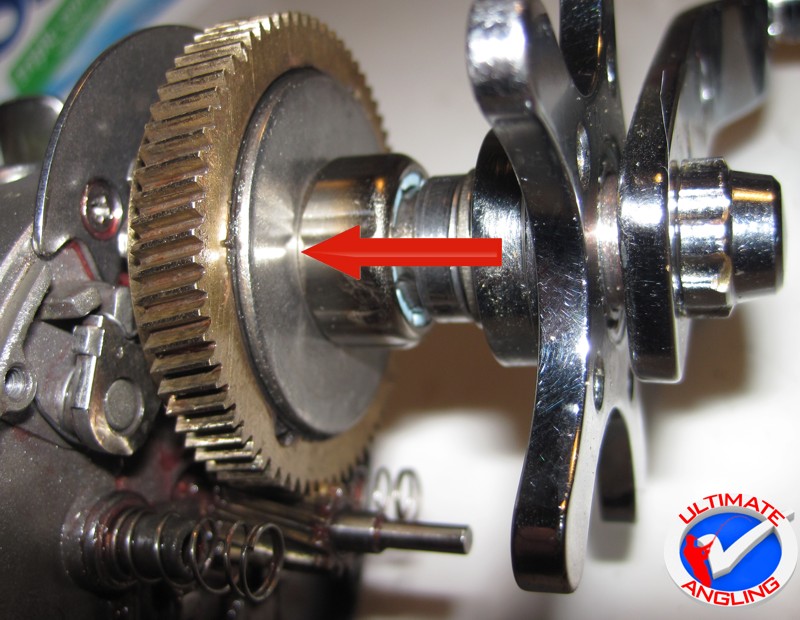
Notice which components are attached (fixed) to the Drive Shaft...
1. The Handle
2. The Star Drag
3. The Inner sleeve of the Anti-reverse bearing
4. Keyed Metal washers inside the Drag Stack
5. The Anti-reverse Ratchet wheel
VIDEO
Here is a short video showing how all components, except the Anti-reverse bearing, rotate as the handle is turned.
In this clip, remember that the Anti-reverse bearing is no longer fixed to the frame of the reel. In normal function, the Anti-reverse bearing cannot turn.
In the first part of the video, the reel is being normally reeled in - everything moves except the AR Bearing.
In the 2nd part, notice how much playback of the handle there is with only the Dog Pawl Anti-reverse working. This shows clearly that the Dog Pawl is a secondary function to the AR Bearing.
In the 3rd part of the Video, when the reel is running in reverse, the shaft is locked, nothing moves except the Drive Gear containing all the Drag Washers.
Multiplier Reel - drag mechanicsWhen the Drive Gear is rotating, not all the Drag washers rotate inside the Drag Stack.
See pic below:
The Eared washers are fixed to the Drive gear and therefore will rotate with the Drive Gear.
The Keyed washers have a rectangular hole in the centre which locks it to the Drive Shaft. Because the Drive shaft is locked and immovable, these washers cannot move, even while the Drive Gear is rotating.

These eared and keyed washers are stacked alternately in between the synthetic fibre Drag washers, which can all rotate, causing friction between the moving and stationary washers.
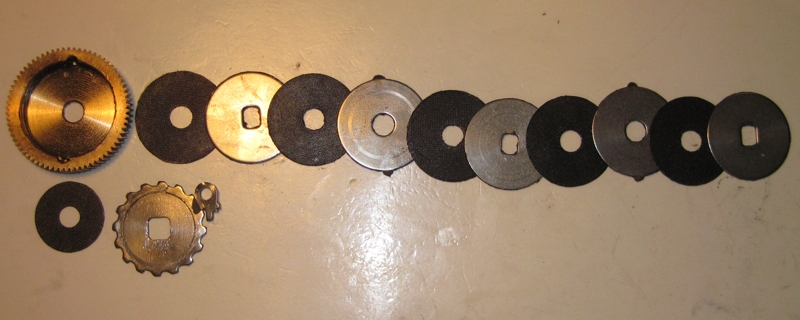
The whole Drag mechanism relies on the Drive Shaft being made to be temporarily fixed.
Remember the handle turns the Drive shaft, which turns the Drive Gear, which turns the Pinion Gear, which turns the Spool.
When the reel runs in reverse, it needs to have the Drive Shaft fixed and stationary, otherwise the handle will also turn, leaving you with some seriously bruised knuckles!
So how does the Drive shaft become fixed?Let's quickly examine the base of the Drive Shaft...
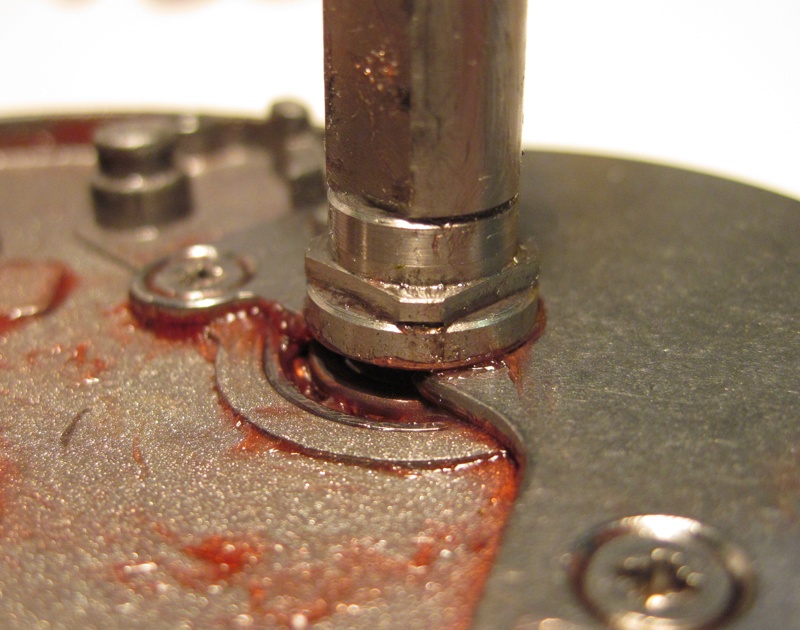
This is an example of the bottom part of the Drive Shaft in a Saltist Reel.
Starting at the bottom, there is a circular platform on which everything above it rests.
Above that is a square piece - this is where the Ratchet gear attaches, and is therefore "fixed" to the Shaft.
Above that is a round portion where the Drive Gear base fits and can rotate.
Above that is a circular/rectangular configuration, which attaches the keyed washers to the Shaft.
So how does the Shaft become fixed?
This is the function of the Anti-reverse mechanism.
The older Multiplier reels had an
Anti-reverse Dog Pawl system - a system used in the old Daiwa's and Speedmasters. It is a mechanical pawl that locked into the Ratchet gear, stopping it from moving. Because the Ratchet gear is attached to the Shaft by it's rectangular hole configuration, the Drive shaft would then not move. These systems had a small spring that held the Pawl in place, making sure that it always kept contact with the Ratchet gear.

A leaf spring kept Pawl...
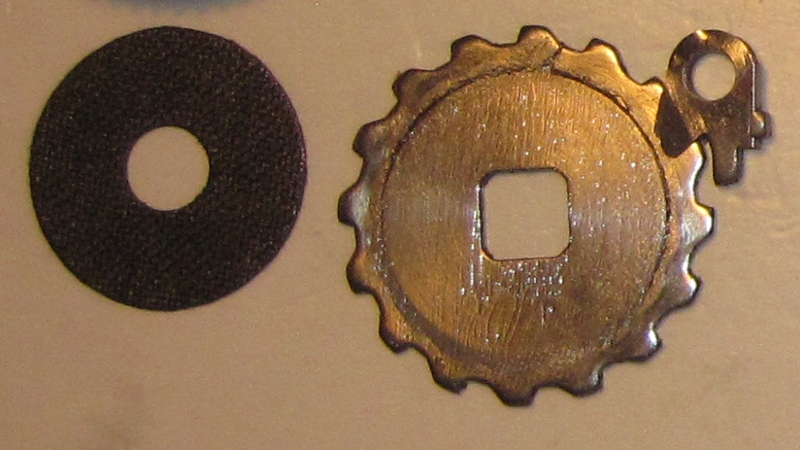
Then someone decided that the noise made by these clicking Pawls were irritating and so the Anti-reverse bearing or 'silent' anti-reverse was born in multipliers.
These have become an integral part of top end Multipliers now. Their big advantage is the function of "Instant Anti-reverse" - there is no (or very little) backplay of the reel handle in reverse.
This is what the Anti-reverse bearing looks like in most reels...
This is one with the entire metal jacket and casing removed. The Metal Jacket normally fits in the frame of the reel and is usually very difficult to remove. (In some reels, like the Penn Fathom, this element cannot be removed without the risk of breaking the frame.)
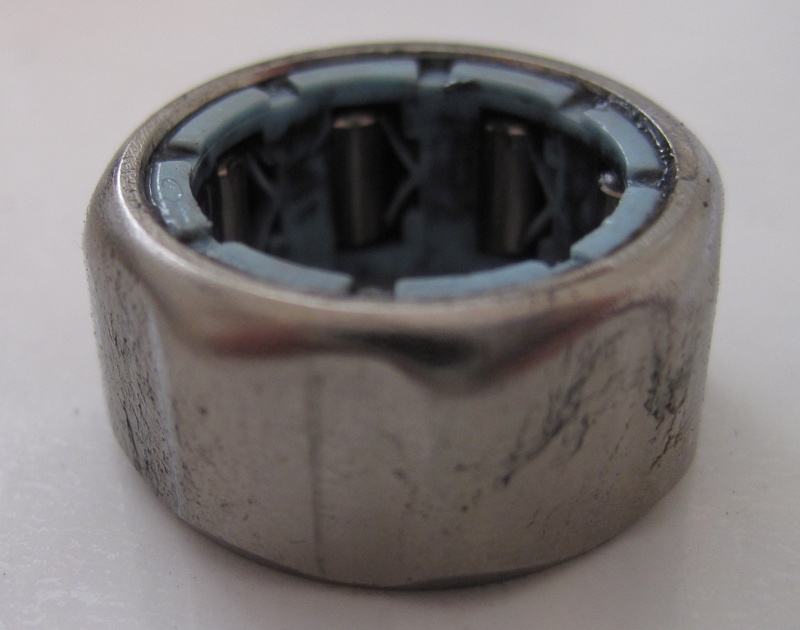
The Anti-reverse mechanism is an integral part of the Drag system, since it fixes the Shaft, so that the Drag washers can then generate friction against each other.
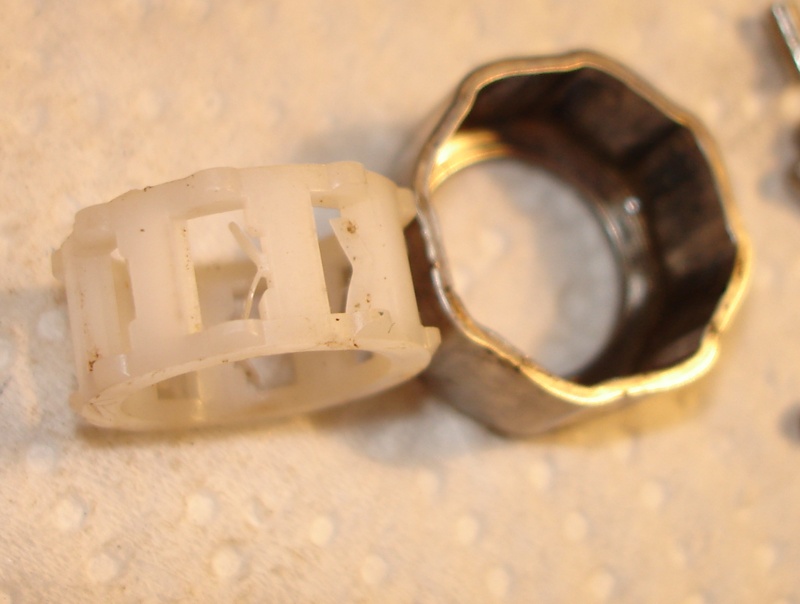
An Anti-reverse bearing or "one -way bearing" or "Roller clutch" is made up of a Metal Jacket that fits into the reel frame and is fixed. Inside the metal is a Plastic frame with some spring levers and several metal roller bearings.
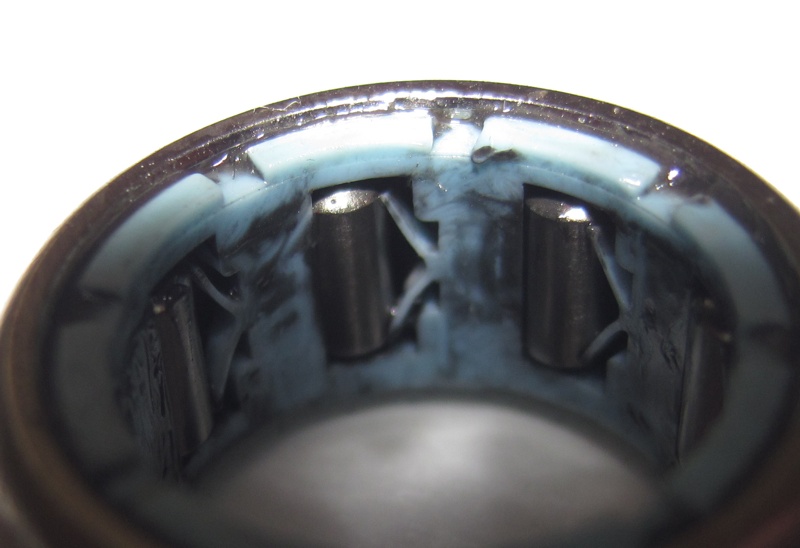
Dismantled Anti-reverse bearing:
 So how do these Anti-reverse bearings work?


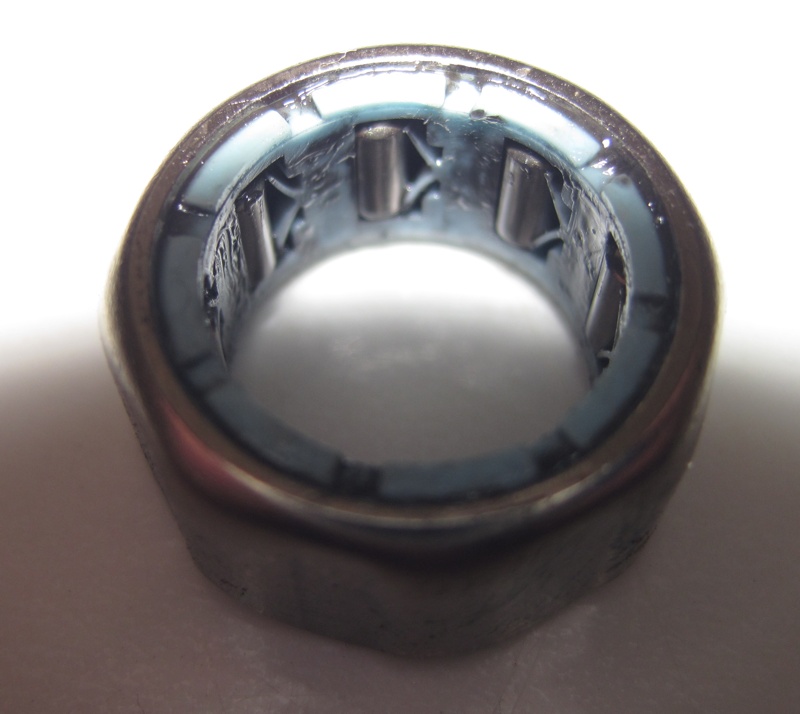

The Anti-reverse bearing is the PRIMARY means of stopping the Drive Shaft. The Anti-reverse Dog Pawl is a SECONDARY or BACKUP to the AR Bearing. (In the Video above, the backplay of the reel handle is because of the lack of an Anti-reverse bearing.)
So why is this so important to know?Well, AR Bearings are finicky things. They work best DRY, unlubed, because they require Friction between the Inner sleeve and the Roller Bearing, in order to function. However, because the materials used in most Roller bearings are highly corrosive, they need REGULAR maintenance, especially in reels that have been submerged.
If a reel is badly maintained, the first things to pack up and seize are the bearings, one of which is the AR bearing.
If a Roller bearing fails, there is nothing to stop the reel from turning backwards, except the mechanical backup of a Dog Pawl. In a poorly maintained reel, the chances are that the Dog Pawl has also been fouled up with dirt, old grease and salt/sand and therefore will also not function. This will result in catastrophic failure of the reel on being loaded...
Ugly stuff...
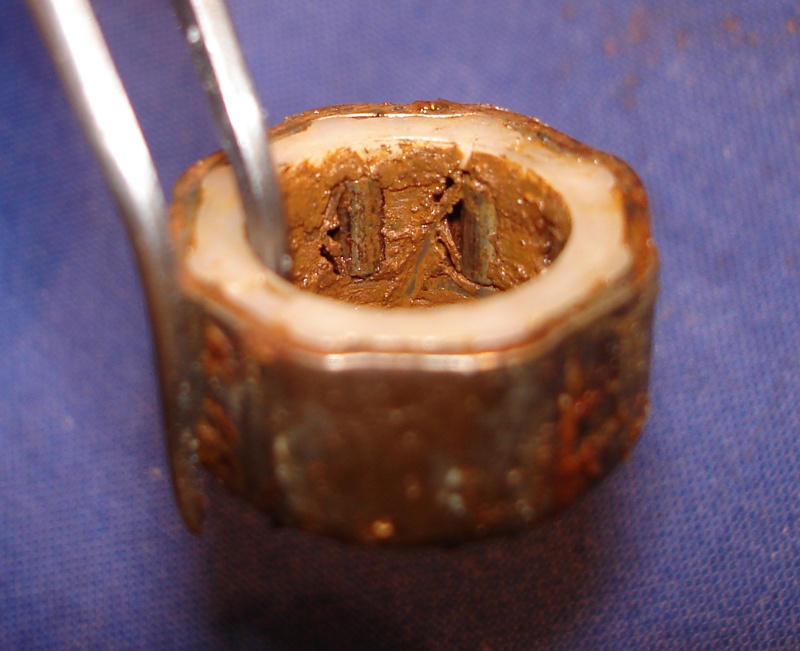
A failed AR Bearing.
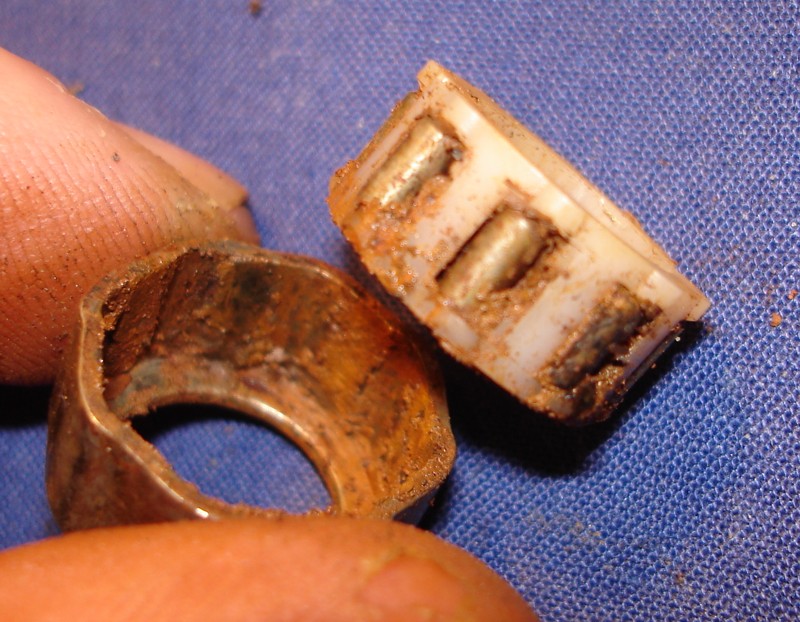
Regular maintenance of the Roller bearing.
If your bearing is reasonably clean, do the following:


Once you have done this, your reel will be good for 2 or 3 trips, unless it has been submerged underwater.
All that needs to be done is a drop or 2 of Reel-X or any anti-corrosive oil. What I do is pop the oil on my pinkie finger and wipe the roller bearings with the oil.
NB: Too much grease or oil WILL cause the AR bearing to fail. It needs friction to work. Oil stops friction and therefore the bearing will slip. This is also a catastrophic failure! )Especially in spinning reels which don't have a backup Pawl system!) Once you have serviced your reel, always, always, always test your Drag to make sure things are working.
Because of the number of failures of several AR bearings in the past, particularly Torium and Trinidad reels that were being used for wading, many anglers now use spring retained Dog Pawls to ensure the fail-safe Anti-reverse. This has been an excellent solution to what was once quite a problem. Newer designed reels are coming out with Double Dog Pawls, which help, but really nothing beats the spring retained Pawl.
DRAG WASHERSThere are many types of Drag washers available. Generally, you pay for what you get.
It is now indisputable that woven Carbon Fibre Drag washers (Carbontex TM) provide consistent and smooth Drag performance over time. Most of the top end reels now come standard with Carbon Fibre Drag washers. The Penn system (HT-100) drag washers were some of the first to come standard in their reels and these Drag systems are still amongst the best available.
The Penn HT-100 Drag system with eared Carbon washers....

Eared Carbon washers

The Penn Drag stack

Many of the old reels that we use came standard with really poor quality Drag washers.
The most important thing about a Drag washer is that it's startup inertia (the force needed to get the Drag Stack moving gently) is a small force. If it is large, then the Drag will "snatch" - this is a jerky movement caused by poor quality Drag washers sticking together.
Once the Drag is moving, it should continue acting with braking force, but smoothly. Many types of washers deform during prolonged use, through heat buildup and residue formation that clogs everything in sight. A perfect example of this is the Dartanium washers used by Shimano in their Toriums and Trinidads. After being heated, they become very brittle and chip and break under stress. If you buy a Torium reel, you need to budget for upgrading the Drag washers to Carbontex SmoothDrag washers, because the Dartanium washers are generally unacceptable for South African fishing style and conditions.
The old Saltists used to come with "Carbon fibre" Drag washers, but in essence were paper thin and tore very easily, useless!
Some Manufacturers have responded to the call for improvements and the entire Daiwa range of reels now come out standard with proper woven Carbon washers.
It has been shown that eared Carbon Drag washers improve the Drag force of a stack.
2 eared Carbon Drag washers (which are therefore fixed to the Drive gear) provides the same Drag as 3 non-eared Drag washers, which are not fixed to the Drive Gear. This seems to be the future or reel design.
The much maligned bottom Drag washer underneath the Drive Gear plays an integral role in the Drag system, most notably acting as a spacer, separating the bottom of the Drive Gear from touching the Ratchet. Alan Tani has shown that the thickness of this washer can improve Drag function, so contrary to what was first thought that the Washer is redundant, it plays a vital role. Penn use a Graphite washer here, but Carbontex washers work perfectly.
Maintenance of Carbon Drag washers
Carbon drag washers should be cleaned and relubed periodically.
Soak in benzine to get rid of residue and dirt. Dry thoroughly and then coat lightly with a layer of Teflon grease, like Cal's. Lubed Carbon drag washers behave more predictably and smoother with grease lubing (lightly!). They also help reduce Drag spike, (that startup inertia on getting them to move).
Bigger is not always better
It has been postulated recently that the formulae for Drag friction has very little to do with Drag washer Surface area. The greatest function determining the force of the Drag is the actual force that is applied to the Drag stack by the Star Drag or Lever Drag. So when looking for a reel with good Drag, it's not the number of washers or the size that count, but rather their composition, thickness and ability to be compressed without dramatic deformation and heat build up.


